Everything You Need to Know About Xochimilco Trajineras
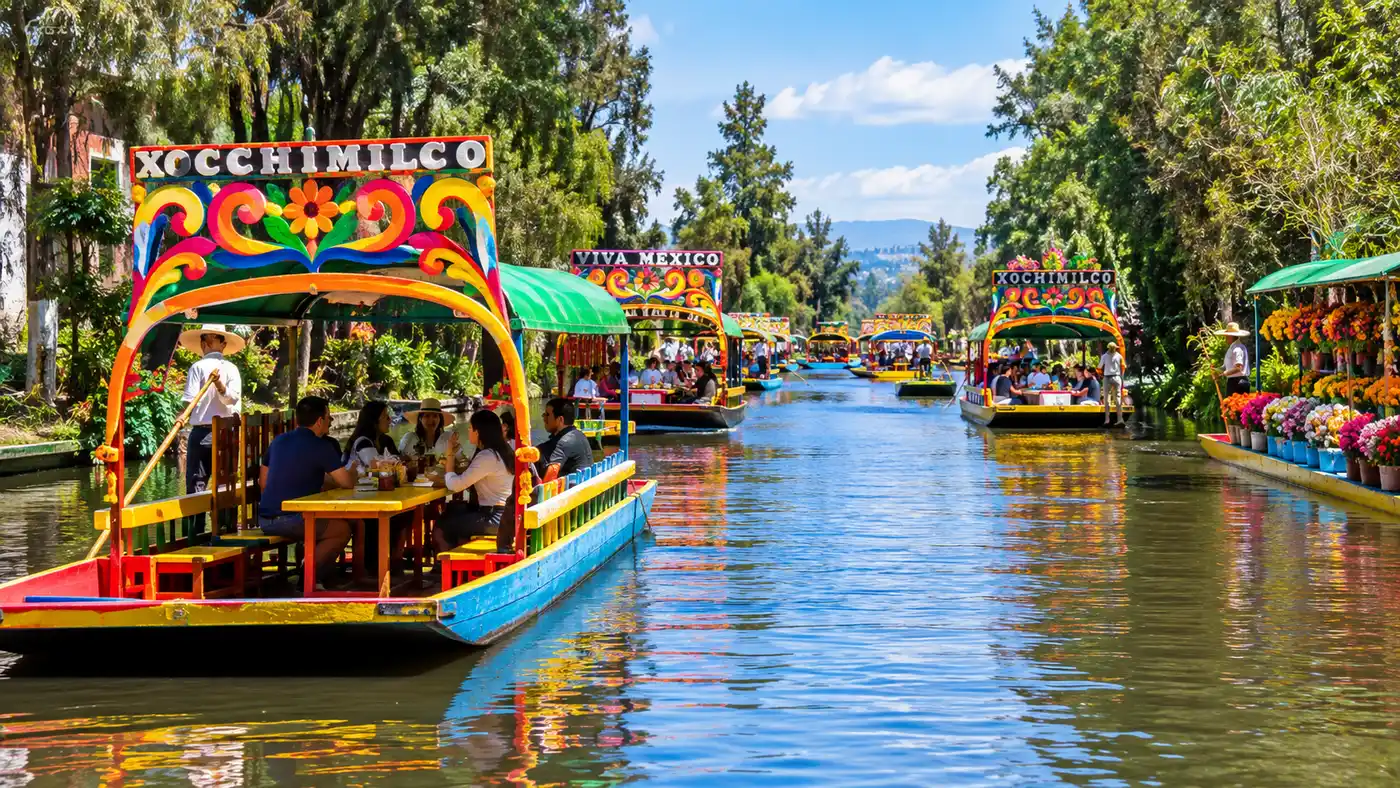
You smell the roasting corn before you even step onto the wooden docks. Smoke drifts across green water, carrying the sharp sting of charred chili powder, diesel exhaust from idling colectivos, and the sweet scent of marigolds wilting in the afternoon sun. Down along the canal banks, hundreds of brightly painted wooden vessels jostle gunwale to gunwale. These are the famous trajineras, flat-bottomed canal boats that have ferried farmers, families, and day-drinkers through the ancient waterways of southern Mexico City for generations. Getting on one is loud, messy, and slightly confusing if you have never done it before.
Most visitors arrive expecting either a serene glide through pre-Hispanic agricultural canals or an unhinged, floating tequila bender. The truth is that both exist in the exact same water, separated only by which pier you choose and what time of day you push off. If you are planning a trip south to visit these legendary waterways, you need to understand how the boat system functions, what you should realistically pay, and how to avoid the swarm of aggressive middlemen waiting for you three miles before you even reach the water.
Book your xochimilco boat tour experience:
What Are Trajineras? History and Meaning
The word trajinera comes from the Spanish verb trajinar, which means to carry goods from one place to another. In plain English, you can think of a trajinera as a heavy wooden punt or barge, propelled entirely by hand using a long wooden pole called a palanca. Centuries ago, these flat-bottomed craft were stripped-down workhorses built to transport produce, flowers, and building supplies from the man-made agricultural islands known as chinampas directly into the heart of Tenochtitlan.
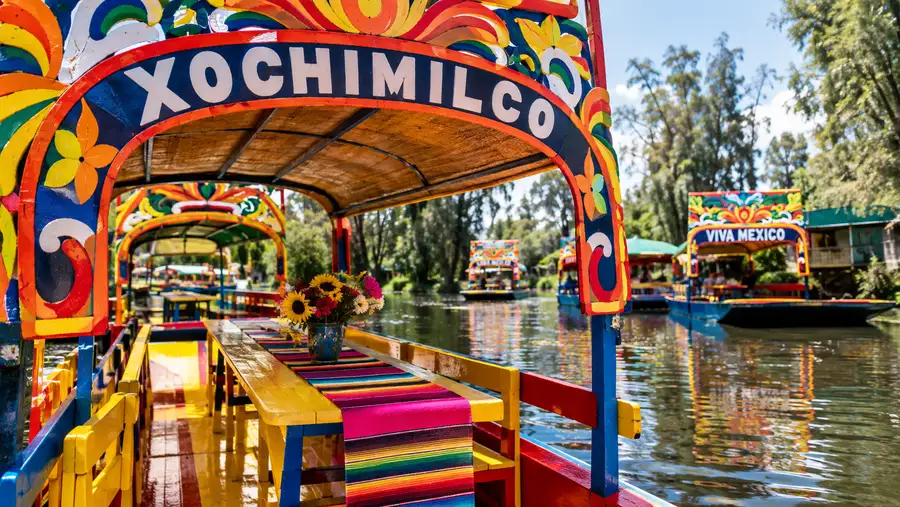
Everything changed in the early twentieth century. Porfirio Díaz wanted to beautify the southern outskirts of the capital, so boat operators began fixing wooden frames over the decks and weaving fresh flowers into elaborate archways at the bow. Tourists loved it. Eventually, cut flowers gave way to carved wood, sheet metal, and neon automotive paint, giving rise to the colorful boats Mexico City is famous for today. You will notice every single trajinera xochimilco operators run has a name painted across its front arch - usually traditional women's names like Lupita, Carmen, or Xochitl, though you will spot plenty named after family businesses, sports teams, or local neighborhoods.
If you want to understand the agricultural marvel underneath the carnival atmosphere, read our guide to the floating gardens of Xochimilco. The willow-lined waterways you cruise through are not just tourist canals. They are the last remnants of a vast lake system that once covered the entire Valley of Mexico, sustained by freshwater springs that pre-date the Aztec empire by hundreds of years.
Choosing Your Embarcadero: Party Vibe vs Quiet Waters
Xochimilco is not a single dock. It is an sprawling borough packed with ten distinct piers, known locally as embarcaderos. Which one you head to will make or break your afternoon, because the canals split into two completely different worlds: the commercial party channels and the protected ecological zones.
The party canal centers around Embarcadero Nuevo Nativitas, Zacapa, and Las Flores. This is where you go if you want mariachi bands stepping onto your boat deck mid-stream, loud Bluetooth speakers blaring cumbia, and vendors pulling up alongside you in canoes selling micheladas, roasted corn, and silver jewelry. It gets chaotic by 2:00 PM on Saturdays. Boats grind against each other in massive canal gridlocks, laughter echoes across the water, and everyone is having a remarkably good time.
Note: Freelance touts on motorbikes frequently follow tourist cars several miles outside the docks, waving furiously and claiming the main pier is closed or flooded. Ignore them completely and drive straight to the official embarcadero parking lot.
If you prefer birdsong, morning mist, and native trees, head south to Embarcadero Cuemanco or Embarcadero Fernando Celada instead. These access the ecological reserve side of the lake system. You will see herons, egrets, and the traditional agricultural plots where local farmers still grow lettuce, radishes, and herbs using five-hundred-year-old techniques. It feels wild and quiet out there, especially around 8:30 AM.
| Embarcadero | Atmosphere | Primary Route | Best Suited For |
|---|---|---|---|
| Nuevo Nativitas | Loud, social, crowded | Main festive loop | Groups, birthdays, festive afternoons |
| Cuemanco | Tranquil, natural, slow | Ecological reserve | Birdwatchers, quiet mornings, nature lovers |
| Fernando Celada | Local, historic, mixed | Central canals | Travelers staying in historic Xochimilco center |
| Belem | Mellow party vibe | San Cristóbal canals | Couples, relaxed afternoon drinks |
Costs, Official Rates, and How the Boats Work
The pricing for xochimilco mexico boats is strictly regulated by the city government, though unscrupulous operators will try to convince you otherwise if you look unsure of yourself. As of early 2024, the official rate is 600 Mexican pesos per hour per boat, not per person. That means whether you are riding solo or packing eighteen friends onto the heavy wooden benches, the boat costs 600 pesos for sixty minutes. If an operator quotes you 500 pesos per head, walk away immediately. They are trying to charge you four times the legal maximum.
You pay the boatman directly, usually right as you step aboard or immediately after returning to dock. Two hours is the absolute sweet spot for a standard leisure trip. One hour barely gets you out of the harbor bottleneck and turns you right around. Three hours gives you enough time to reach the axolotl sanctuaries or stop at an island restaurant for slow-cooked carnitas and freshly pressed blue corn tortillas. For a full breakdown of the logistics, take a look at our guide to Xochimilco boat prices, hours, and embarcaderos before you head down.
Pro tip: Bring your own cooler packed with beer, ice, and snacks. Boatmen never charge corkage fees, and stocking up at an OXXO convenience store beforehand saves you considerable cash once on the water.
Everything on the water operates on cash. As your trajinera glides forward, tiny wooden skiffs rowed by single vendors will pull up alongside your gunwale with long metal hooks to sell you things. You should expect to negotiate gently, but keep cash ready for these common canal purchases:
- Mariachi songs: typically around 150 to 220 pesos per song, played right on your boat while rocking gently in the swell.
- Marimba duos: around 80 to 120 pesos per song, featuring bright wooden xylophones played by two people crammed into a canoe.
- Giant micheladas: between 90 and 140 pesos depending on size, mixed with Clamato, hot sauce, lime juice, and chili rims.
- Elotes and esquites: roughly 40 to 60 pesos for steaming cups of sweet corn layered with mayonnaise, cotija cheese, and chili.
- Woven flower crowns: about 50 to 80 pesos, woven from fresh marigolds, baby's breath, and bougainvillea on the docks.
Book your xochimilco boat tour experience:
What to Pack for Your Boat Ride
Spending an afternoon on the trajineras mexico city provides is basically an extended picnic on water. You are trapped on a wooden vessel with no motor, no electrical outlets, and no plumbing for several hours. Preparing properly makes the difference between an incredible memory and an uncomfortable afternoon spent desperately looking for a restroom.
The bathroom situation surprises people. Trajineras do not have onboard toilets. Instead, when someone in your group needs to go, your boatman navigates toward one of the small chinampa islands along the canal bank where local families run basic restrooms out of their backyards. They usually cost 5 or 10 pesos to enter, and you will want small coins ready because change is hard to come by on a tiny mud bank.
- Cash in small denominations: 20, 50, and 100-peso banknotes are essential, since nobody floating past has change for a 500-peso bill.
- A portable Bluetooth speaker: playing music turns the boat ride into an instant celebration, especially as the sun begins to drop.
- Sunscreen and a wide hat: the arched tin roofs protect the middle table, but sunlight bounces intensely off the canal water.
- Hand sanitizer and tissues: island restrooms frequently run out of toilet paper and running water by late afternoon.
- A light windbreaker or sweater: the temperature drops sharply in Xochimilco the moment the sun slips behind the volcanoes.
The Canals: Axolotls, Chinampas, and the Doll Island
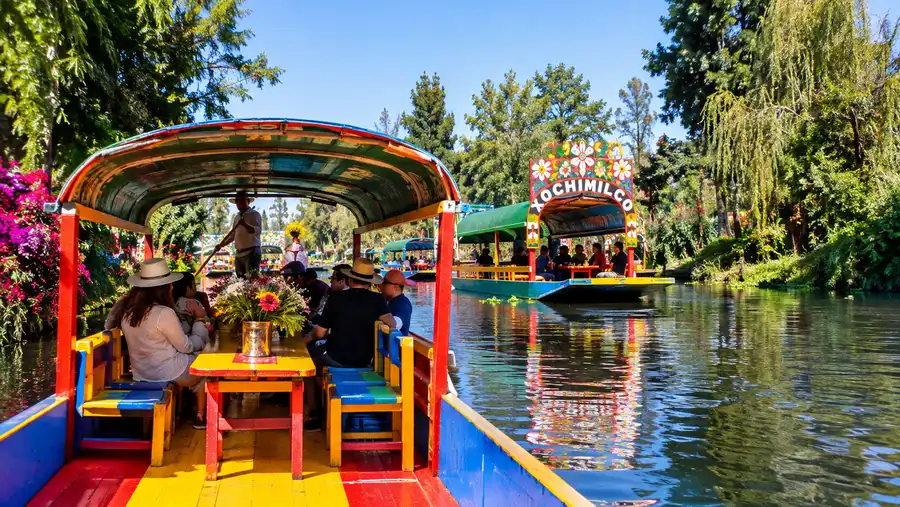
A cruise on a trajinera xochimilco route reveals far more than just floating bars. If you book a three or four-hour journey from the southern piers, your boatman can guide you out toward the protected conservation zones where the famous Mexican axolotl lives. These strange, smiling amphibians are critically endangered in the wild due to water contamination and introduced carp, but several community-run rescue centers along the canals allow you to view them up close in aerated tanks.
Then there is the infamous Isla de las Muñecas, or the Island of the Dolls. Decades ago, a recluse named Don Julián Santana Barrera began collecting discarded, sun-bleached dolls from the canal trash and hanging them from the willow branches to appease the spirit of a drowned girl he believed haunted the waters. Today, hundreds of decaying, weathered plastic limbs dangle creepily from the trees. Visiting the original island requires roughly four hours of round-trip rowing, though several tourist copycat islands sit along the shorter routes. Honestly, I think the real appeal of the deep canals is not the creepy dolls at all. It is watching the water open up, smelling the damp soil of the agricultural plots, and realizing this is how millions of people lived long before concrete covered the valley.
Frequently Asked Questions about trajineras
What are trajineras made of?
Traditional trajineras are hand-built from thick Montezuma cypress (ahuehuete) and pine planks, sealed with tar and water-resistant resin. The flat bottom allows them to slide easily over shallow, muddy canal bottoms without catching on submerged vegetation or rocks.
How many people fit on a single trajinera?
Most standard boats are licensed to hold up to 18 to 20 passengers comfortably around a central wooden banquet table. Smaller craft exist for couples, and larger party platforms can occasionally accommodate up to 24 people, though overcrowding can prompt harbor patrol officers to issue fines.
Do I need to book a trajinera in advance?
No, you never need to book ahead if you are just showing up for a standard tour. Simply walk directly to the official dock ticket booth at any major embarcadero, agree on the hours, pay the flat government-set rate, and step directly onto an available boat.
Are the canals in Xochimilco clean?
The water quality varies drastically depending on the area. The party canals suffer from runoff and boat congestion, while the ecological zones are cleaner and fed by natural treated spring water. It is definitely not water you want to swim in, but it does not smell bad along the open routes.
Can you bring your own alcohol on the boats?
Yes, bringing your own beer, wine, spirits, mixers, and snacks is completely permitted and widely practiced by locals. There are no corkage fees or bag checks, but public intoxication that causes dangerous disturbances on the water is monitored by canal police.
Quick Reference
- Official boat rate: 600 MXN per hour (per boat, not per person)
- Operating hours: 9:00 AM to 6:00 PM daily
- Typical boat capacity: 18 to 20 passengers
- Payment method: strictly cash for boats, food, and tipping
- Standard route duration: 2 to 3 hours recommended
Book your xochimilco boat tour experience:
My Take
Spending an afternoon aboard these magical xochimilco trajineras remains one of the best things you can do in Mexico City. Yes, it is touristy, and yes, the parking touts will test your patience before you even step foot on the dock. But once the boatman shoves off with his long wooden pole, the engine noise of the capital completely fades away. Grab a few friends, buy two bags of ice and a crate of cold Victoria beers, pick a sunny afternoon, and let the slow rhythm of the ancient lake take over for a few hours. You will be very glad you went.
Read more about xochimilco boat tour.