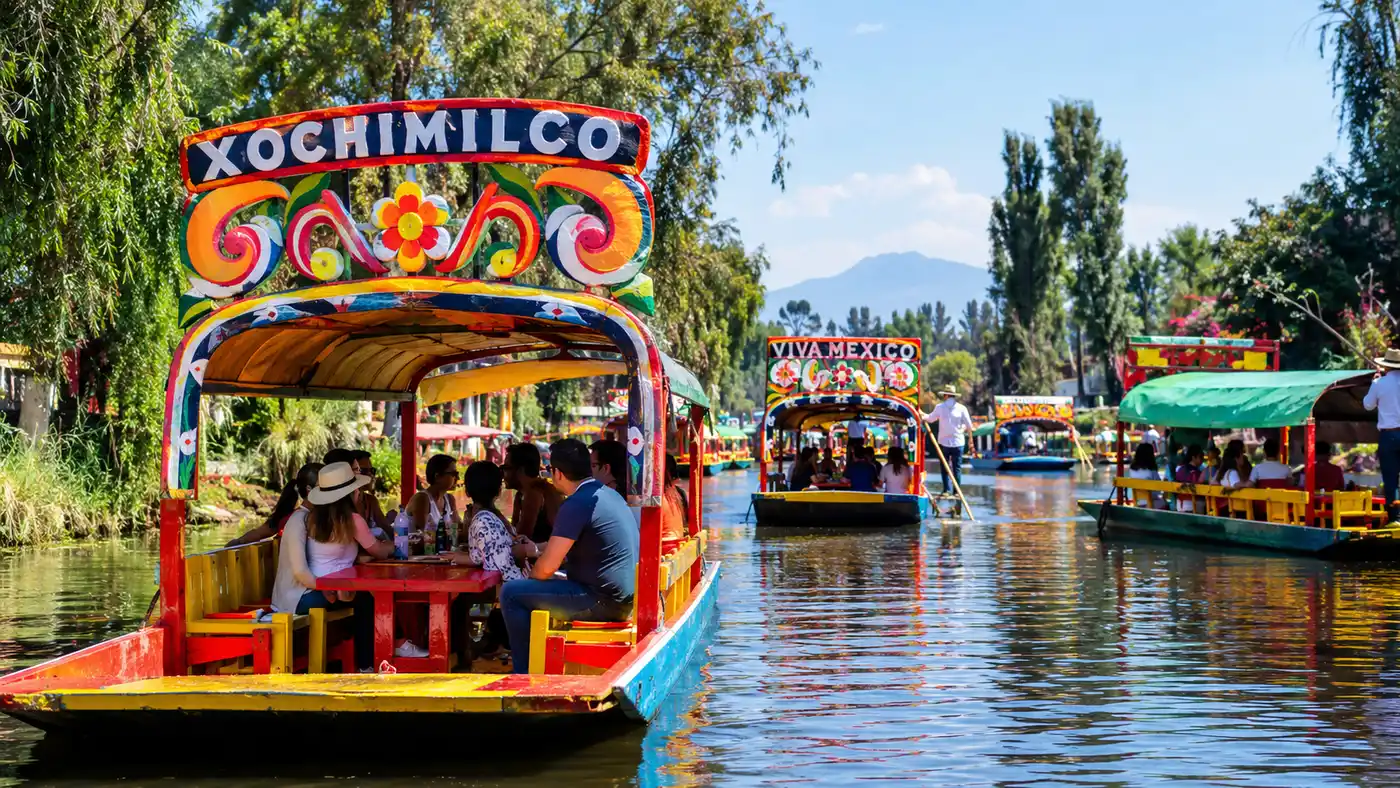
What Does Xochimilco Mean? History and Pronunciation
My first afternoon in southern Mexico City smelled like diesel, roasted corn, and canal water. I stood near the curb trying to tell my taxi driver where I wanted to go, tripping completely over the syllables. I muttered something that sounded like "Zo-chee-minko" and got a blank stare. If you are wondering what is xochimilco and why nobody can agree on how to say it outside of central Mexico, you are in good company.
Most travelers know the place as a weekend party spot filled with painted boats and brass bands. That reputation is fun, but it skips past roughly a thousand years of agricultural genius and Aztec engineering. To understand the canals, you have to peel back the language that named them.
Book your xochimilco boat tour experience:
Nahuatl Roots: What Does Xochimilco Mean?
To unpack the true xochimilco meaning, you have to look at Nahuatl, the lingua franca of the Aztec Empire. Nahuatl builds meaning by stacking small words together like blocks. It does not waste space.
The name comes from three distinct elements: xōchitl, mīlli, and the locative suffix -co. Put them side by side and you get "in the place of the flower fields" or "where the flowers grow." It sounds poetic, almost like a tourist brochure written five hundred years early. Yet for the original inhabitants, it was a literal, practical description of their backyard.
The southern basin of the Valley of Mexico had freshwater springs. Unlike the brackish water up around Tenochtitlan, the southern lakes were calm and sweet. Flowers, maize, amaranth, and squash grew in thick soil beds anchored by willow roots right on the water. When people referred to the settlement, they simply pointed south toward the flower-growing fields.
| Nahuatl Component | Original Word | Literal Meaning | Role in Name |
|---|---|---|---|
| Xochi- | Xōchitl | Flower or blossom | Identifies the primary crop or visual feature |
| -mil- | Mīlli | Cultivated field or farmland | Signifies agricultural labor, not wild nature |
| -co | -co | In, at, or place of | Locative suffix common in Mexican place names |
You find that same -mil- root inside everyday Mexican words today. A milpa is the traditional small farming plot where corn, beans, and squash climb together. When you ask what does xochimilco mean to a local farmer who still tends those plots at dawn, they will tell you it means hard work on muddy ground, not just painted party boats.
How to Say Xochimilco: A Guide to Xochimilco Pronunciation
English speakers tend to freeze when they see a word starting with an X. We want to say "Z", like xylophone, or "Eks", like an X-ray. Spanish speakers from other countries sometimes stumble here too, because the letter X in Mexico is an absolute wildcard.
If you want to know how to say xochimilco like someone who lives in Mexico City, break it into four clean syllables: so-chee-MEEL-koh. The emphasis lands squarely on the third syllable.
- First syllable (Xo): Sounds like the English word "so" or the Spanish word "sol" without the L. It is a soft, clean S sound, never a Z or a buzzing sound.
- Second syllable (chi): Pronounced exactly like the "chee" in cheese.
- Third syllable (mil): Rhymes with the English word "meal", held just a fraction of a second longer than the others because this is where the spoken stress falls.
- Fourth syllable (co): A short, dry "koh" sound, like the start of cold.
Pro tip: If you are practicing your xochimilco pronunciation with cab drivers or metro attendants, drop any English aspiration on that final 'co' sound. Keep the vowels short, flat, and clipped.
History explains the confusion. In classical Nahuatl during the 1500s, the X sounded like the English "sh". Back then, people called it something closer to sho-chee-MEEL-ko. When Spanish scribes wrote down indigenous languages, they used the letter X to represent that soft "sh" sound. Spanish changed over the centuries, dropping that sound from everyday speech, and central Mexican Spanish shifted the initial X to a simple "s" sound in words like Xochimilco and Xochiquetzal. In words like México or Oaxaca, it shifted to an "h" sound instead. It looks chaotic, honestly, but once you memorize the local habit, it rolls right off your tongue.
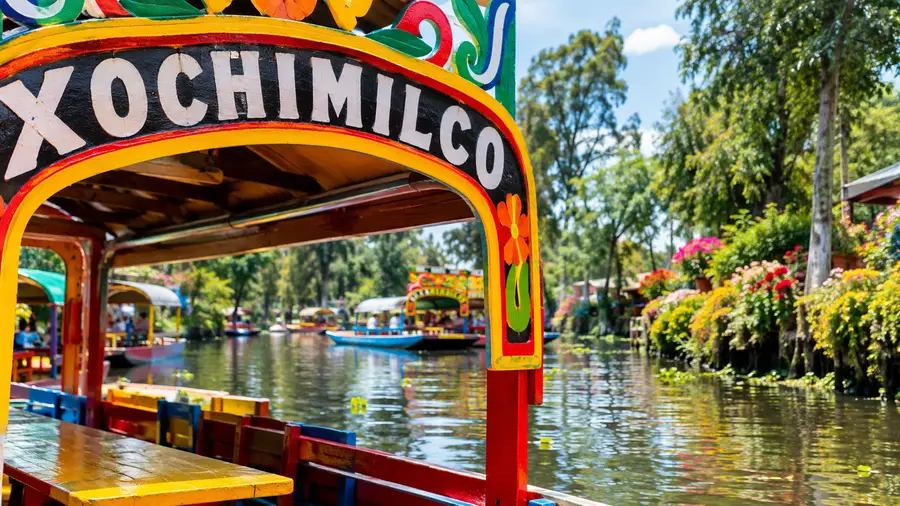
What Is Xochimilco in Mexico City Today?
Geographically, what is xochimilco in mexico city right now? It is one of the capital's 16 official boroughs, sitting roughly 17 miles south of the historic center. The district covers about 48 square miles, sprawling across urban concrete, mountain foothills, and 110 miles of remaining waterways.
It feels like a different universe compared to Roma Norte or Polanco. The air is slightly cooler, the streets around the central market are narrow, and people still gather in the main plaza outside the 16th-century San Bernardino de Siena church to eat tamales wrapped in banana leaves.
- The tourist embarcaderos: Bustling piers like Nuevo Nativitas and Cuemanco where visitors rent wooden boats called trajineras.
- The ecological zone: A sprawling protected wetland reserved for native water birds, migratory ducks, and working nurseries.
- The historic center: A network of cobblestone alleys, traditional neighborhood chapels, and bustling food markets that have operated since colonial times.
- The southern hills: Mountainous farming towns like San Mateo Xalpa that produce nopal cactus and look down over the basin.
Most day-trippers arrive at the piers around noon, hire a boat, drink cold beers, and listen to floating mariachi groups. That is an unforgettable afternoon, but it is only a sliver of the actual community. Xochimilco is home to over 400,000 people who live, commute, and work in neighborhoods built directly over forgotten lakebeds.
Book your xochimilco boat tour experience:
Aztec Engineering and the Origin of Chinampas
To grasp the real scale of this place, you have to picture the Valley of Mexico before the Spanish drained the lakes. It was an interconnected system of five shallow bodies of water surrounded by volcanoes. The original Xochimilca tribe arrived around the 10th century and realized they needed a clever way to feed their growing population without running out of solid land.
They invented the chinampa. Often mistranslated as "floating gardens", these were not floating rafts at all. Farmers wove giant rectangular frames out of reeds and stakes, anchored them to the shallow lake floor, and filled the enclosures with alternating layers of lake mud, decaying compost, and organic vegetation.
Note: Calling chinampas "floating" is a common myth started by early European travelers who did not look beneath the water line. The beds are firmly anchored into the lakebed by ahuejote willow roots.
Those willow trees were the secret weapon. Their root systems grow straight down into underwater sediment like thick biological pilings. They held the dirt beds together through floods and earthquakes. Because the water constantly seeped through the root walls, the soil stayed damp and nutrient-dense year-round. A chinampa could produce up to seven distinct harvests in a single calendar year, feeding tens of thousands of people in Tenochtitlan without a single draft animal or metal plow.
Riding along the canals on colorful Xochimilco trajineras gives you a front-row view of these living artifacts. You can still see modern chinamperos loading wooden skiffs with lettuce, mint, rosemary, and bright orange cempasúchil flowers for Day of the Dead.
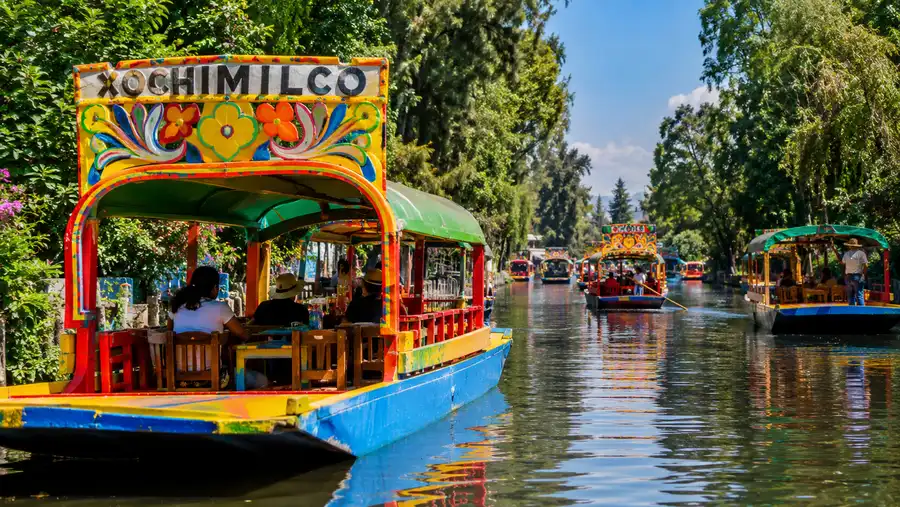
Preserving What Is Xochimilco: Ecology, Threats, and Axolotls
Survival has not been easy for the canals. In 1987, UNESCO recognized the chinampas and canals as a World Heritage site, yet development pressure from the expanding mega-city has never let up. Over-pumping of underground aquifers has caused parts of the lake basin to subside unevenly. In several back channels, water levels can drop quickly during the dry months between February and May.
There are also invasive species in the water. Decades ago, authorities introduced carp and African tilapia to the canals hoping to support local fishing. Those fish multiplied fast and began eating the eggs of the axolotl, the critically endangered walking salamander that exists in the wild only here.
Local scientists from UNAM and multi-generation farming families are fighting back through community projects. They build clean water bio-filters along private chinampa canals, keep non-native fish out with mesh screens, and sell heirloom produce directly to high-end restaurants in the city center. When travelers book ecological tours that visit working farms instead of just blasting music on party boats, that tourism money goes straight into saving the wetlands.
Frequently Asked Questions about what is xochimilco
What does xochimilco mean in English?
It translates directly from Nahuatl to "in the place of the flower fields" or "where flowers grow," combining the words for flower (xōchitl), cultivated field (mīlli), and location (-co).
How do locals say xochimilco?
Locals pronounce it "so-chee-MEEL-koh." The initial X sounds like an English "S", the middle sounds like "chee-meal", and the accent falls on that third syllable.
Why is Xochimilco so famous?
It contains the last surviving canal and chinampa agricultural system built by pre-Hispanic civilizations in the Valley of Mexico, preserved as a UNESCO World Heritage site and vibrant cultural center.
Quick Reference
- Nahuatl translation: Place of the flower fields
- Pronunciation: so-chee-MEEL-koh
- Distance from central CDMX: 17 miles south
- Key historic feature: Ancient chinampa farming beds
- UNESCO status: World Heritage site since 1987
Book your xochimilco boat tour experience:
The Bottom Line
Knowing the story behind the name changes how you see the canals. It is easy to spend a sunny afternoon on the water eating tacos and listening to guitars without realizing you are floating across an agricultural marvel that kept the Aztec Empire alive. Next time you head south, say the syllables with confidence, look past the painted boats, and take a second to appreciate the mud, willows, and flowers that make this place unlike anywhere else on earth.
Read more about xochimilco boat tour.