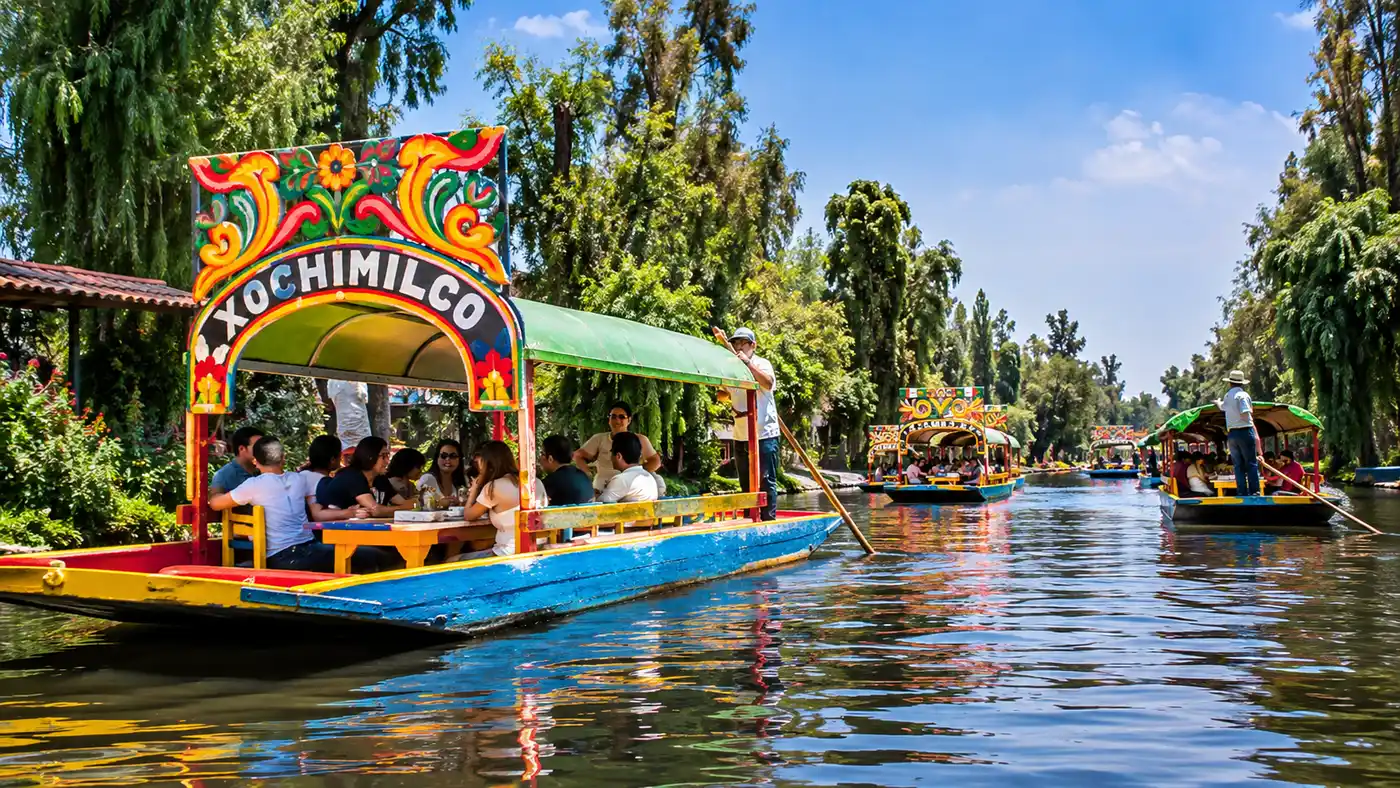
How to Get from Mexico City to Xochimilco
Getting your transport sorted from the center of town down to the canals sounds deceptively easy until you actually open a map and look at the sprawl. Most visitors base themselves in Roma Norte, Condesa, or the Centro Histórico, which means traveling from mexico city to xochimilco requires crossing almost the entire vertical length of the capital. It can be a breeze or an absolute nightmare depending on the hour you leave, the route you choose, and whether a sudden rainstorm floods the southern ring road.
I have done this trip half a dozen times using pretty much every method available. You can squeeze into the blue metro line alongside commuters, hail an Uber and sit in sluggish Tlalpan traffic, or book a private van that handles the logistics while you sleep in the backseat. Each option has its own trade-offs between price, patience, and sanity. Here is the realistic breakdown of how to make the trek south without losing your temper or your wallet.
Book your xochimilco boat tour experience:
Where Is Xochimilco Located and How Far Is It?
If you pull up a xochimilco mexico map, you will see the borough tucked away in the far southeast corner of the city. So, where is xochimilco located in relation to the places you are probably hanging out? It sits roughly 28 kilometers south of the Zócalo and around 24 kilometers from Parque México in Condesa. On paper, 24 kilometers sounds like a quick half-hour cruise. In Mexico City traffic, distance is an illusion. Time is the only metric that matters.
During an empty Sunday morning at 8:00 AM, an Uber might drop you at the docks in 38 minutes flat. Try making that same run at 4:30 PM on a Friday, and you will stare at brake lights along Calzada de Tlalpan for an hour and 45 minutes. The landscape shifts dramatically as you head down. The trendy coffee shops and French-style apartments give way to dense commercial avenues, auto repair shops, and eventually the misty, low-slung neighborhoods that buffer the ancient lake bed.
People often ask how far is xochimilco from mexico city center in terms of practical travel planning. Plan for an hour minimum each way, no matter what Google Maps promises when you check it from your hotel bed. It pays to understand where is xochimilco in the grand scheme of the valley. It represents the last surviving remnant of the vast, interconnected lake system that the Aztecs navigated before the Spanish drained the basin to build a terrestrial capital.
Pro tip: Aim to leave your accommodation between 8:30 AM and 9:15 AM on weekends. You will skip the midday gridlock on Calzada de Tlalpan and reach the docks right as the boatmen are untying the first trajineras.
Taking an Uber or Taxi from Mexico City to Xochimilco
Calling a rideshare is easily the most popular way to tackle the journey. It eliminates the confusion of transit transfers and drops you directly at the water. Uber, DiDi, and Cabify all operate reliably across the city, though Uber tends to have the most drivers circulating in the southern boroughs when it comes time to return home.
A one-way ride from Roma, Juarez, or Condesa typically costs between 240 and 380 Mexican pesos, which works out to roughly $13 to $21 USD. During peak surge pricing or heavy downpours, that number can climb past 500 pesos. Split between three or four friends, it is remarkably cheap for a 25-kilometer journey. If you decide to hail a street cab instead, only use official, registered taxi stands known as sitios. Never flag down an unvetted green-and-pink cab on the street for a trip this far south, as overcharging is common and safety can be hit or miss.
The trickiest part of using a rideshare is setting the right drop-off point. Do not just type "Xochimilco" into your app. If you do, the driver will likely leave you in the crowded commercial center near the municipal market, leaving you with a long walk or a confusing cycle-rickshaw ride to the canals. You need to enter a specific pier name. For instance, putting in the exact xochimilco boat tour address for Embarcadero Nuevo Nativitas (Calle del Mercado 133) or Embarcadero Cuemanco ensures you arrive at an official dock with standardized municipal rates.
Note: Cell service can get spotty near the southern ecological docks like Cuemanco. When heading back, request your rideshare while you are still near the main pier entrance before walking out to the main avenue.
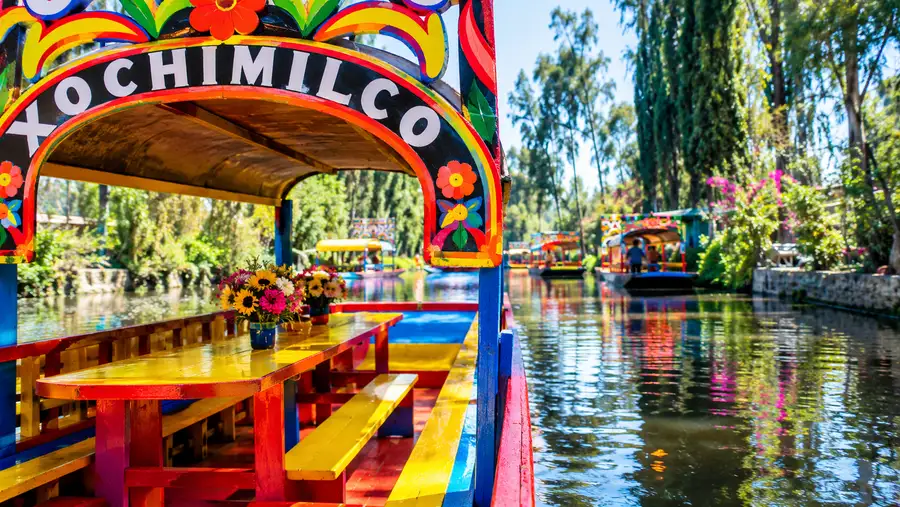
Taking the Metro and Tren Ligero: The Budget Route
If you want to travel like a local and spend almost nothing, the city transit system will get you there for eight pesos total. That is less than fifty cents. The route requires zero navigation genius, but it demands patience and comfortable shoes because you will be standing for most of the trip.
The journey splits into two distinct legs: the underground Metro and the above-ground light rail train. First, you need to reach Metro Line 2, the blue line that runs north-south through the historic core. Hop on at Bellas Artes, Zócalo, or Pino Suárez, and take the train all the way south to its terminal station, Tasqueña. Tasqueña is a massive transit hub where intercity buses, local colectivos, and trains converge. It feels chaotic, but the signage overhead is clear.
Once you step off the blue line at Tasqueña, follow the blue overhead signs pointing toward the Tren Ligero. You do not need to exit onto the street. The light rail platform sits within the same station complex, though you must tap your rechargeable Metro card again to enter the turnstiles. Take the Tren Ligero south to the very end of the line, which is Estación Terminal Xochimilco. The train ride takes about 35 minutes across 16 stops, passing quiet residential communities, soccer fields, and soccer stadiums.
- Purchase a transit card: buy the standard Integrated Mobility card at any metro station machine for 15 pesos, then load at least 20 pesos of credit.
- Board Line 2 southbound: ride until the Tasqueña terminus, which takes roughly 25 to 30 minutes from downtown.
- Transfer to Tren Ligero: tap through the dedicated light rail turnstiles inside Tasqueña station for an additional 3 pesos.
- Ride to the end: stay on the tram until the final stop, simply marked Xochimilco.
- Walk to the pier: exit the station and walk roughly 10 to 12 minutes straight down Calle 16 de Septiembre to reach Embarcadero Fernando Celada.
The train empties out considerably after passing the Estadio Azteca stop, so you can usually snag a seat for the final stretch. Once you exit Xochimilco station, you are in the heart of the historic pueblo. Street vendors line the sidewalks selling tamales, cut fruit, and phone chargers. If you prefer to visit a livelier, larger dock like Nativitas instead of Fernando Celada, you can grab a green microbus outside the station displaying "Nativitas" on the windshield for about 7 pesos, or hop in a quick local cab for 40 pesos.
Book your xochimilco boat tour experience:
Booking a Xochimilco Boat Tour with Transportation Included
Not everyone wants to navigate train turnstiles or argue with taxi drivers about meter rates. If your travel style leans toward convenience, booking an organized xochimilco boat tour with transportation removes all the friction. These packages typically pick you up directly from your hotel or a central meeting point in Roma, Condesa, or Reforma in an air-conditioned passenger van.
Most organized tours pair the canals with other southern sights to make the drive worthwhile. A standard itinerary hits the colonial streets of Coyoacán, stops at the Casa Azul to see Frida Kahlo's artwork, and finishes the afternoon with a private boat ride on the water. Having a driver waiting for you after three hours of drinking beers and listening to mariachis on the canals is an undeniable luxury. You bypass the messy process of calling an Uber in an area where dozens of other tourists are simultaneously trying to hail rides on congested two-lane streets.
Prices for these combo day tours range from $45 to $95 USD per person depending on group size, whether entry tickets to museums are covered, and if lunch is provided on the boat. If you are traveling solo or as a duo, an organized tour can actually compete with the cost of multiple long-distance Uber rides and private trajinera rentals. Families and larger groups usually find it cheaper to hire a private driver for the entire day through a concierge or personal recommendation.
| Travel Method | Average Cost (USD) | Typical Travel Time | Convenience Level | Best Suited For |
|---|---|---|---|---|
| Metro + Tren Ligero | $0.50 per person | 75 - 95 mins | Low (requires walking & transfer) | Budget travelers, backpackers |
| Uber / Rideshare App | $14 - $22 per vehicle | 45 - 80 mins | High (door-to-dock service) | Couples, small groups of 3-4 |
| Organized Group Tour | $45 - $95 per person | Full day (6 - 8 hours total) | Very High (includes guide & tickets) | Solo travelers, first-timers |
| Private Hired Driver | $80 - $130 per day | Flexible schedule | Maximum (waits on site) | Families, larger groups |
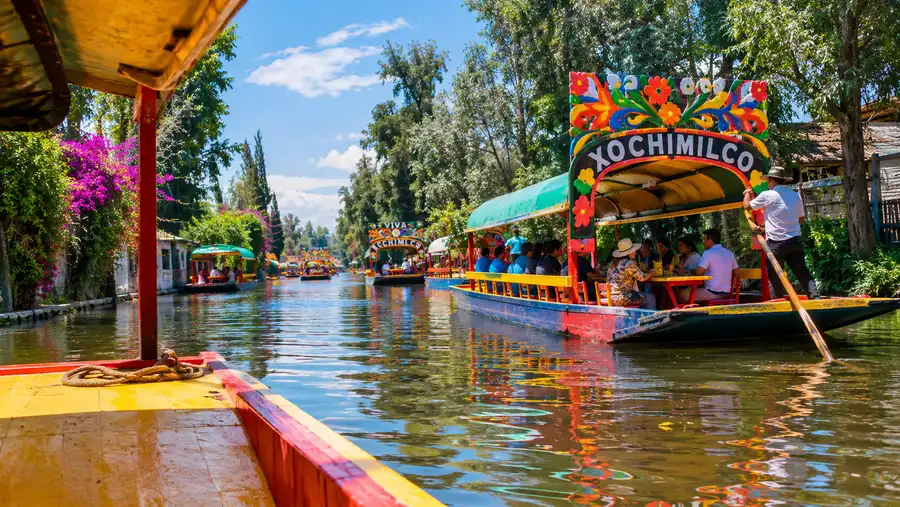
Choosing the Right Embarcadero to Target
Xochimilco is not a single dock. The canal network features around ten distinct embarcaderos scattered across different parts of the borough. Picking the wrong one can give you an entirely different experience than what you had in mind. Some docks cater to raucous weekend parties with booming sound systems, while others emphasize quiet birdwatching, traditional agriculture, and nature conservation.
Before you tell your driver where to go, decide which vibe you want. Your choice directly influences which road you take into the borough and how bad the traffic will be at the entrance.
- Embarcadero Nuevo Nativitas: the biggest, most tourist-friendly pier with extensive parking, clean public restrooms, a large souvenir market, and dozens of floating food vendors.
- Embarcadero Cuemanco: situated near the ecological reserve on the east side of the borough; perfect for visiting the axolotl sanctuaries and the historic chinampas away from loud music.
- Embarcadero Fernando Celada: the closest pier to the downtown light rail station, making it the premier choice for transit riders wanting a quick walk from the train.
- Embarcadero Las Flores: a quieter secondary dock favored by locals who want to rent a boat quickly without fighting massive bus tour crowds.
Be aware of a notorious local hustle when approaching any dock by car or on foot. Young men riding bicycles or motorbikes will position themselves along the access avenues, waving furiously at cars and claiming that the main pier is closed for a private event, washed out by rain, or fully booked. They will offer to lead you to an "open" dock down a quiet alleyway. Ignore them completely. The municipal docks are open every single day of the year. These touts simply steer tourists toward unofficial operators who charge double or triple the regulated municipal rate.
Instruct your driver to stay on the main street until you reach the official ticket booth at the water's edge. The government sets the hourly price per boat, not per person. That price applies across all registered piers, so you never need to fall for high-pressure street pitches.
Frequently Asked Questions about mexico city to xochimilco
Can I take an Uber back to central Mexico City easily from the canals?
Yes, though you may wait 10 to 15 minutes for an available driver during Sunday evenings when thousands of visitors leave at the same time. Walk away from the immediate dockside chaos out to a brightly lit main avenue before requesting your ride so your driver can locate you without getting blocked by double-parked tour buses.
Is it safe to take the Metro and Tren Ligero down to Xochimilco?
The route is widely used by local families, students, and daily workers. It is generally safe during daytime hours, but pickpocketing is common on crowded train cars. Keep your phone in your front pocket, carry your backpack against your chest when trains are tightly packed, and avoid flashing expensive cameras near the transit stations.
How much should a trajinera boat cost once I arrive?
The official, government-regulated rate is 600 pesos per hour for the entire boat, regardless of whether you have two people or fifteen people on board. Do not let dock operators convince you that the rate is per passenger. Official price boards are posted near the ticket office at authorized piers like Nativitas and Cuemanco.
How long should I plan to spend in Xochimilco?
A standard boat ride lasts between two and three hours, which gives you ample time to cruise the channels, listen to floating mariachis, and grab food from passing vendors. Combined with travel time from downtown, plan for a total trip duration of five to six hours from door to door.
Quick Reference
- Distance: 24 to 28 kilometers south of central CDMX
- Uber travel time: 45 to 80 minutes ($14 to $22 USD)
- Metro route: Line 2 to Tasqueña, transfer to Tren Ligero
- Transit fare: 8 pesos total per person ($0.45 USD)
- Official boat rate: 600 pesos per hour per boat
Book your xochimilco boat tour experience:
The Bottom Line
Getting out to the floating gardens takes a bit of effort, but the journey down south is half the fun of understanding how Mexico City actually works. If you have a group of friends and a few extra dollars, call an Uber after breakfast and take the easy route down Calzada de Tlalpan. If you are watching your budget or simply want to experience the daily rhythm of southern commuters, grab a plastic transit card and take the train. Once your boat pushes off into the shallow green water and the first floating vendor hands you a cold michelada, whatever traffic jam you endured on the way down vanishes into thin air.
Read more about xochimilco boat tour.